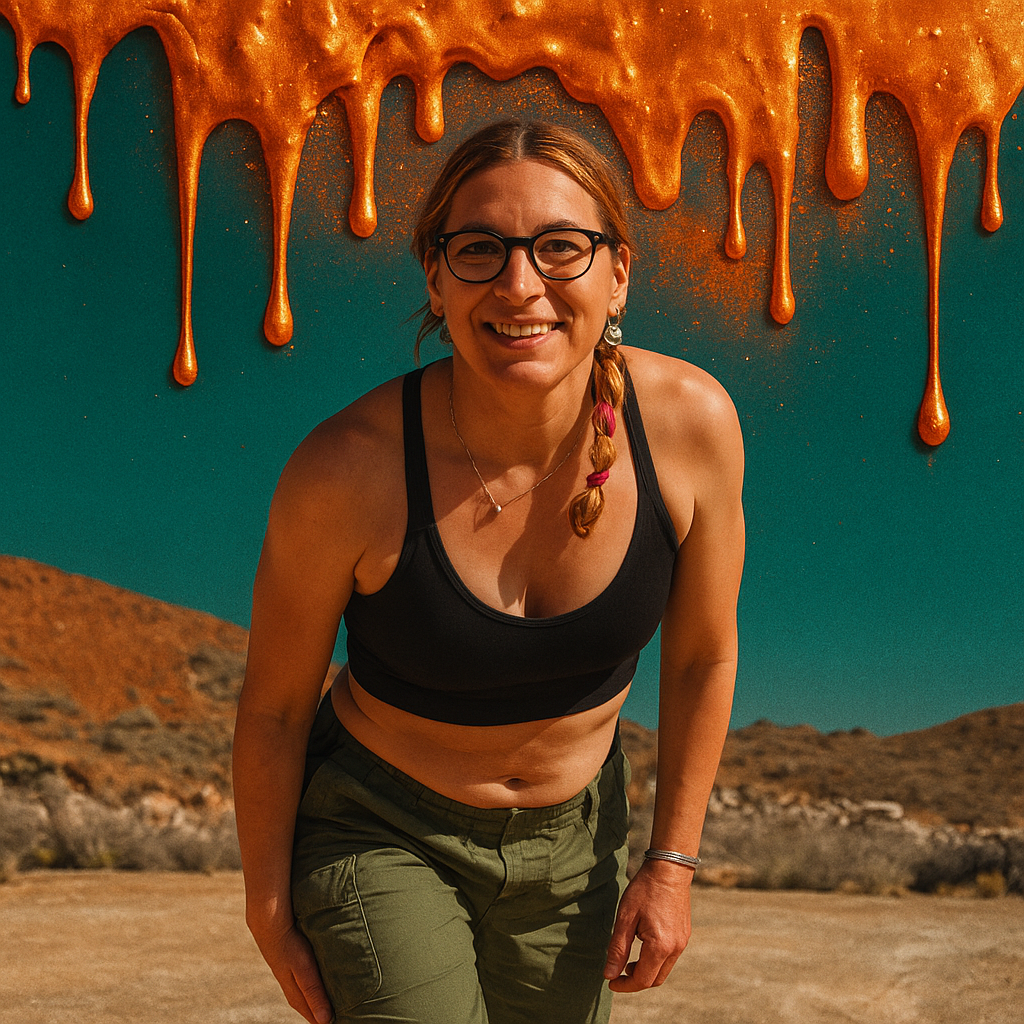
Sheena's Adventures
I roam Utah's backroads and badlands.
Hunting agate, chalcedony, fossils, and the storms that carve them free from ancient stone — filming as I go, one wash at a time. This isn't scripted adventure content with manufactured drama and breathless narration. It's documentation of actual exploration, the kind where you drive three hours on a hunch, walk another two into the desert, and maybe find something spectacular or maybe just learn what that particular formation doesn't hold.
This is geology meets curiosity.
Every rock tells a story written in layers — volcanic ash compressed over millions of years, prehistoric riverbeds preserving evidence of ancient floods, mineral-rich water seeping through porous stone and crystallizing into hidden chambers of agate and quartz. I read those stories and share them, translating deep time into human scale, making the incomprehensible age of the landscape feel tangible through the stones I find.
One rock. One thunderhead. One moment where the desert sun meets teal sky and the world hums with possibility.
Utah's geology is a library written in stone. The Colorado Plateau's layers read like pages spanning 300 million years of Earth history. Navajo Sandstone records ancient sand dunes larger than any on the planet today. Morrison Formation preserves the Jurassic period when dinosaurs left tracks now visible in cliff faces. Chinle Formation holds petrified forests and some of the world's most spectacular agatized wood.
I focus on the small-scale treasures hidden within those grand formations.
Chalcedony nodules weathering out of volcanic ash. Agate formations with fortification banding so precise you can count seasonal variations from 30 million years ago. Fossils of ancient gastropods, their spiral shells replaced molecule by molecule with opal. Thunder eggs split open to reveal crystalline centers. Geodes lined with amethyst. Jasper in patterns that look painted by deliberate hand but emerged from purely chemical processes.
The filming happens as part of the exploration, not separate from it.
I'm not staging scenes or setting up perfect shots. The camera comes out when something catches my attention — unusual coloration in a wash wall suggesting a productive seam, interesting texture differences indicating potential agate pockets, or just the way afternoon light hits a ridge in that specific golden-hour intensity that makes the whole landscape glow. The documentation serves the exploration, capturing both the finds and the process of finding.
Weather shapes every expedition.
Summer monsoons carve new washes and expose fresh material, but they also make dirt roads impassable and flash floods deadly. Winter provides the most comfortable exploring temperatures but shorter days and the constant calculation of whether you can reach your spot and get back before dark. Spring brings wildflowers and tourist season. Fall offers the sweet spot — moderate temperatures, low precipitation, longer shadows that make reading terrain easier.
I've learned to read the desert's moods.
Cloud formations tell you whether to head out or stay home. The way wind moves through sage indicates what weather's coming. Morning sky color predicts afternoon intensity. You develop an instinct for which washes will be productive after rain, which formations weather fastest, where water concentrates minerals, how recent the last collector passed through based on disturbed ground and scattered dig piles.
No hype. No filter. Just the real chase and the little wins that make the day spectacular.
Some days you find museum-quality specimens. Most days you find nice examples of common material. Many days you find nothing particularly special but walk ten miles through stunning landscape and come home tired in that good way, the kind of exhaustion that comes from physical effort in pursuit of something you care about. All of it counts. All of it matters. The hunt itself holds value regardless of outcome.
The channel has attracted a community of rockhounds and geology enthusiasts who appreciate the approach.
They're tired of channels that promise incredible finds every episode through creative editing or outright staging. They want realistic documentation of what actual rockhounding looks like — long drives, hot sun, careful searching, occasional spectacular finds, frequent modest successes, and the persistent satisfaction of being out in the field doing work you love even when the results are ordinary.
I answer questions in the comments. Where is this? What formation? Can I collect there? What tools do you carry?
The interactions feed back into content. Someone asks about identifying jasper versus chert — next video includes identification techniques. Multiple people wonder about legalities of collecting on different land types — I make an explainer about BLM, state trust, national park, and private land regulations. The community shapes the direction as much as my own interests do.
The editing stays clean and purposeful.
No jump cuts every three seconds. No aggressive background music competing with the content. No zoom transitions or flashy effects. The landscape and the finds provide enough visual interest on their own. The narration stays informational without trying to manufacture excitement. If something's exciting, the content itself conveys that without me overselling it.
I'm building an archive of Utah's accessible geology through the lens of rockhounding.
Each video documents specific locations, formations, and finds in a way that helps viewers understand what's out there, how to recognize it, and what makes it interesting from both collecting and geological perspectives. Over time, the channel becomes a reference library — practical information delivered through engaging documentation of real expeditions.
This work connects me to something larger than myself.
Every stone I find links me to processes operating on timescales that dwarf human history. Holding a piece of agate means touching material that formed when this desert was tropical coastline, when these mountains didn't exist yet, when Earth's continents occupied entirely different positions. The rocks are time machines. Collecting them is a form of connecting with deep history.
And sharing that connection with others multiplies its value.
Every stone tells a story. Every storm leaves a trail. Come walk it with me.